










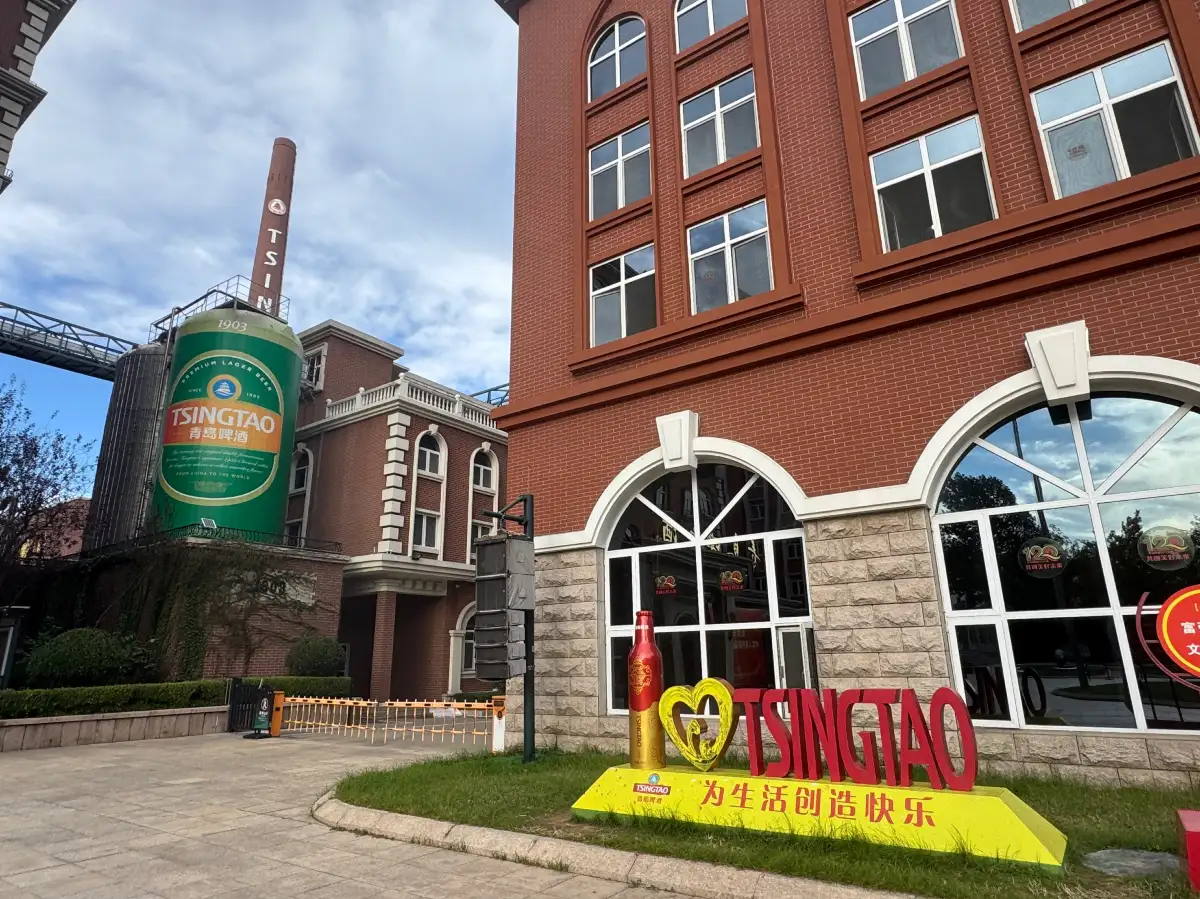
Most museums about beer show you the past. The Tsingtao Beer Museum shows you the past, the present and the glass of beer in your hand — all on one ticket, along one strictly one-way route. Your visit moves through two connected halls inside the original 1903 German-style brewery complex on Dengzhou Road: Hall A (History) tells how Tsingtao beer was born, and Hall B (Production) shows how it is made this very morning. This guide walks the route in order, exactly as you will, so you know what you are looking at before you arrive.
Key takeaways
- One ticket, two halls, one direction. Hall A (History) flows into Hall B (Production); there is no backtracking and nothing extra to pay.
- 30,000+ artifacts line the century-old memory corridor — the museum’s own count of precious pieces from the German occupation era.
- The “lighthouse factory” is real: through the glass walls of Hall B, smart production lines bottle today’s Tsingtao in front of you.
- Two free tastings are built into the route — the cloudy original beer and the crisp pure draft.
- Plan 2–3 hours and read this guide before you go; the story lands twice as hard when you know what to look for.
Quick answer: the museum is the best value in Qingdao — tickets from $9 on Trip.com include both halls, the interactive labs and both free beer tastings.
Hall A — the History Hall
Hall A occupies the oldest workshops of the 1903 complex, and its subject is the city as much as the beer. The exhibition traces Tsingtao’s journey from a colonial-era German brewery to a national icon and a global brand — through photographs, documents, bottles, posters and, above all, machines. As China’s first beer-themed model for industrial heritage revitalization, the hall keeps its precious early equipment where it actually worked: old motors, mash kettles and boiling kettles, weathered and magnificent.
Take your time here. The labels, the enamel signs and the old delivery bicycles say as much about Qingdao as about the brewery — this is the room where you understand why beer is the city’s second language. One traveler put it plainly: “One of the best museums I have been to in China. You learn the history of the Tsingtao Beer as well as the history of Qingdao.”
The century-old memory corridor
The spine of Hall A is the century-old memory corridor — a walkable timeline lined with more than 30,000 artifacts from the German occupation era onward. Glass cases hold brewer’s logs, recipe ledgers, porcelain beer steins, crown corks, vintage advertising and workers’ tools; the walls carry photographs that age from sepia to Kodachrome as you go. It is the museum’s most atmospheric stretch and its most photogenic — allow at least 30–40 minutes and walk it slowly.
Photo tip: the corridor’s warm lighting is made for portraits. Shoot early morning (before 10:00) and you will often get the long axis completely empty.
Hall B — the Production Hall
Cross a courtyard and the century turns: Hall B is the old factory still breathing. Wooden fermentation tanks stand in rows, the old bottling hall keeps its conveyors and crown-cork machines, and the air changes — cooler, damper, faintly yeasty. This is the museum’s signature dialogue: traditional wooden fermentation tanks on one side, fully automated filling equipment on the other, artisanal heritage and digital transformation talking to each other across a single hall.
Travelers consistently rate this the highlight: “In Hall A you get the history,” writes one reviewer, “Hall B will let you see the old factory — and the real, working production line too. There are two spots handing out free beer. So much fun!”
The lighthouse factory, through the glass
Along the far side of Hall B, glass walls open onto the smart production lines of what the industry calls a “lighthouse factory” — a World Economic Forum designation for the most advanced manufacturing sites on earth. Watch robotic arms seize bottles, rinse, fill, cap, label and palletize thousands per hour with barely a human hand in sight. Nothing separates you from the line but the glass; you are watching tomorrow’s Tsingtao being made while standing in yesterday’s workshop.
- Find the filling carousel — the fastest sequence to watch, endlessly hypnotic.
- Look up at the pipe runs — the hall routes beer and cleaning fluid through color-coded lines overhead.
- Check the quality lab windows — technicians still taste and test every batch the old way.
VR lab, hop science & the two tastings
The museum’s “living heritage + technological empowerment” concept lives in its interactive stations. The VR brewing lab puts you in the brewer’s chair — adjust malt ratios, manage the mash and see your recipe respond. The hop recognition system decodes the science behind beer flavors: smell, compare and identify hop varieties until “floral, citrus, pine” stops being marketing talk. And the personalized label printing studio puts your face on a real Tsingtao label — the most Qingdao souvenir there is.
Then the tasting. Two pours are included with every ticket, served at fixed points along the route: the original beer, unfiltered and cloudy with yeast, rich and bready; and the pure draft, the clean golden style Qingdao drinks by the bag on the beach. Tasting them back to back is a mini masterclass in what filtration does — and travelers report the fresh beer is simply “amazing”. Tastings are served to visitors of legal drinking age, and ID is required for entry anyway.
From real trips: a first-time visitor in our review sample called the museum “beautiful, clean, and fascinating — you can see the old brewery and modern production, and the fresh beer was amazing. Plus, two free drinks!”
Frequently asked questions
How long do Hall A and Hall B take?
The recommended sightseeing time is 2–3 hours for both halls plus the interactive stations and tastings. History lovers should budget closer to three; the memory corridor alone rewards 30–40 unhurried minutes.
Can I visit Hall B without Hall A?
No — the route is strictly one-way from Hall A into Hall B. That is by design: the production hall makes far more sense once you know the story, and the flow keeps crowds moving evenly through the museum.
Is the production line actually working?
Yes — the glass-walled “lighthouse factory” is a real, operating production line. You watch today’s Tsingtao being bottled while you stand inside the 1903 complex. It is the single most memorable sight in the museum.
Where do I get the two free beers?
At tasting stations along the one-way route, after the production exhibits. Your ticket includes both pours — the original and the pure draft. Staff pour at fixed points; just follow the signs and keep your ticket handy.
Are the exhibits in English?
Yes — key exhibits carry English descriptions alongside Chinese, and the route is easy to follow without a guide. For the deepest history, an English guided tour can be arranged locally; most travelers, however, visit happily on their own.
Walk the route yourself — from $9
Two halls, two free beers, one unmissable afternoon
Instant confirmation, any international card, ID entry at the gate. Just bring your phone on the day.
Before you go, sort the logistics: our tickets guide explains the price and ID entry, the best-time guide picks your hour, and the Visitor Guide packs everything into one page. For families, the family guide covers what kids love most.
Sources & official references
- Trip.com — Tsingtao Beer Museum attraction listing (checked October 2026): Hall A & Hall B route, 2–3 hour recommendation, two free tastings.
- Official museum description: 1903 German-style industrial complex, 30,000+ artifacts, “lighthouse factory” smart production lines.
- Verified traveler reviews on Trip.com (48,593 reviews, 4.8/5 average) for route highlights and tasting locations.
- Walkthrough verified by our editorial team on 2025–2026 visits.
